
APPLIED RESEARCH
Prosperous Lishui: Envisioning New Relations Between Urban and Rural Areas
2020
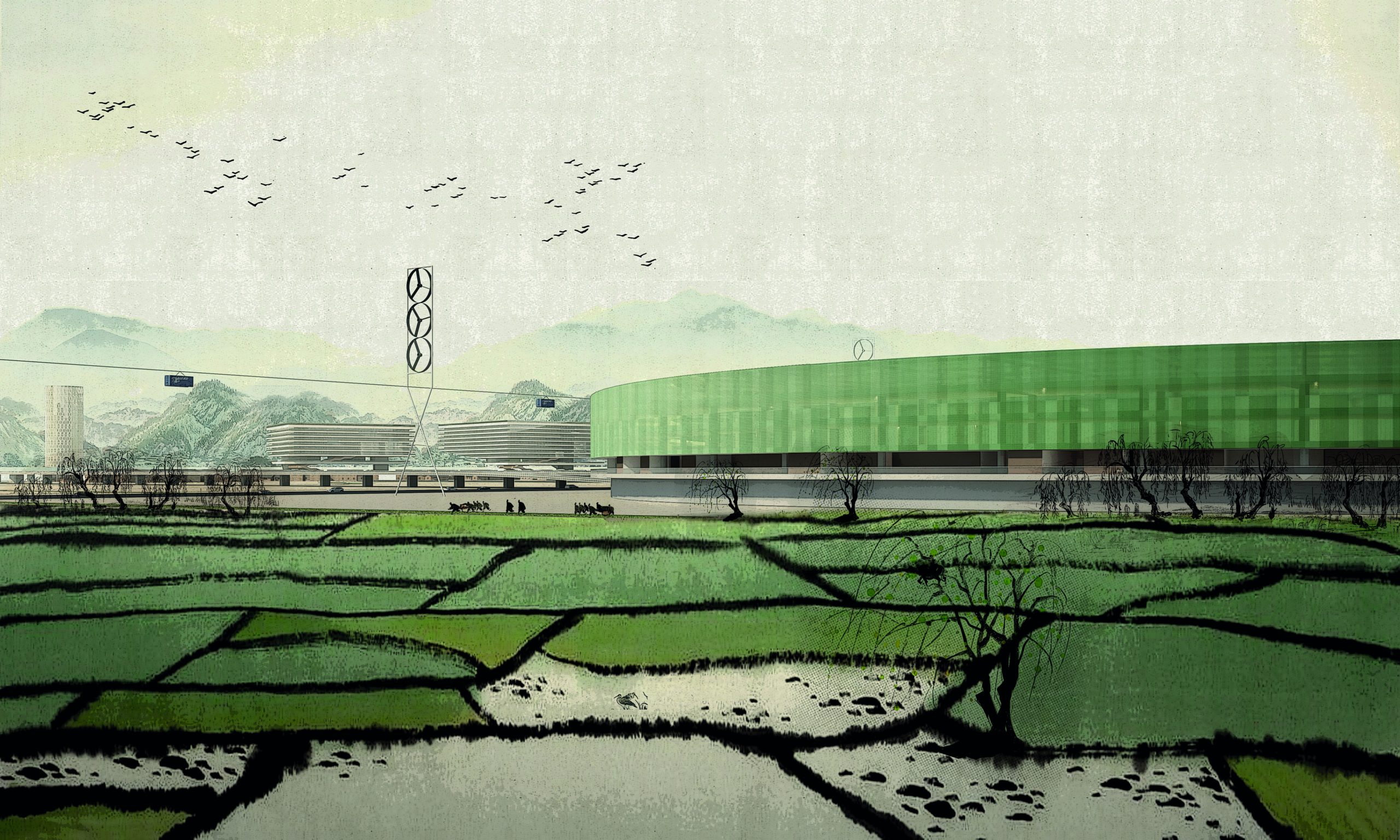
The keyword of the challenge highlighted by the International Competition is the ‘Shanshui’ (literally “mountain and water”, translated into “landscape”), which is both a classic painting style and a philosophical and poetic concept, where nature and people coexist in a holistic view. The goal of the competition was to transfer the concept into a new sustainable urban development model, to reinstate a mutual tie between nature and city, while being “people-centered”.
URBAN AND ARCHITECTURAL DESIGN
Period: May – November 2020
Location: Lishui, Zhejiang, China
Developed for: Future Shan Shui City International Urban Design Competition
Organizers: Lishui Municipal People’s Government, Lishui Municipal Development and Reform Commission, Dwellings in Lishui Mountains Project Planning and Construction Leading Group Office
In collaboration with: Politecnico di Torino / Institute of Mountain Architecture and South China University of Technology
Awarded 3rd Prize – RMB800.000/€102.337
CREDITS:
Project leaders: Michele Bonino, Yimin Sun – SCUT
Project managers: Mauro Berta, Edoardo Bruno | Huang Yeqiang, Zhu Xiaojing – SCUT
Urban Planning and Design: Leonardo Ramondetti, Angelo Sampieri | Ping Su, Chunyang Zhang – SCUT
Architectural Design: Antonio De Rossi, Roberto Dini, Camilla Forina, Martina Franco, Ziyu Lin, Xian Lu | Haohao Xu, Qunjie Zhang – SCUT
Consultants on Chinese Urbanization Procesess: Astrid Safina, Francesca Governa
Collaborators: Simona Belluscio, Huirong Chen, Weiying Chen, Alessandro Delforno, Manjiao Huang, Yingyi Lv, Ahmed Mansouri, Riccardo Masala, Matteo Migliaccio, Lidia Preti, Piera Elisa Ragusa, Ottavia Valz Gris, Sheng Xia, and Andrea Zegna, Wentian ZhengHuang Manjiao, Chen Weiying
Academic Board for Architectural Design: Alessandro Armando, Michela Barosio, Giulia Bertola, Daniela Bosia, Simona Canepa, Martina Crapolicchio, Massimo Crotti, Eleonora Gabbarini, Rossella Gugliotta, Roberta Ingaramo, Lin Yang, Paolo Mellano, Maicol Negrello, Francesco Novelli, Maria Paola Repellino, Ana Ricchiardi, Davide Rolfo, Francesca Ronco, Marco Trisciuoglio, Zeynep Tulumen, Elena Vigliocco, Zhang Ting – Politecnico di Torino / Department of Architecture and Design
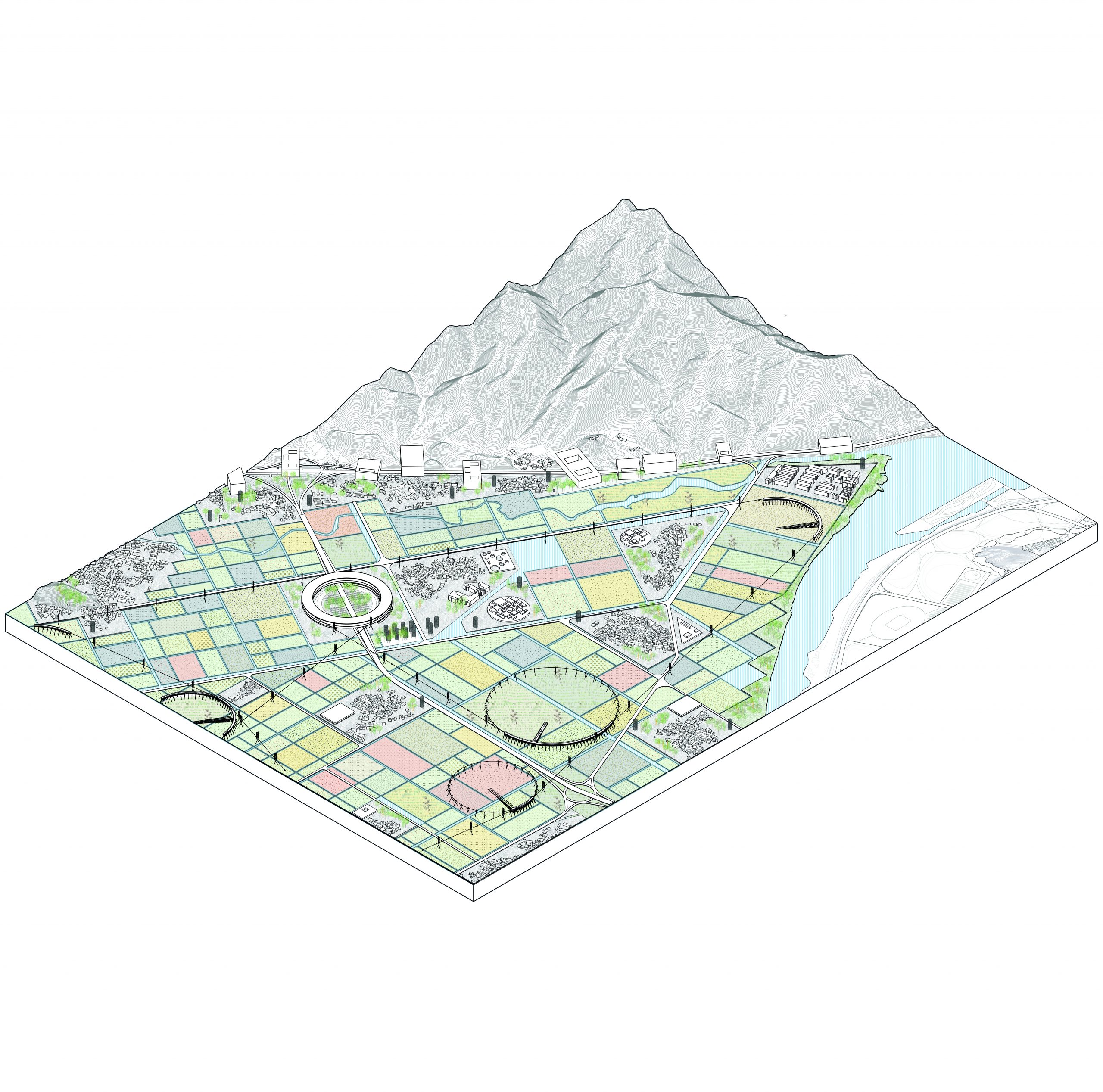
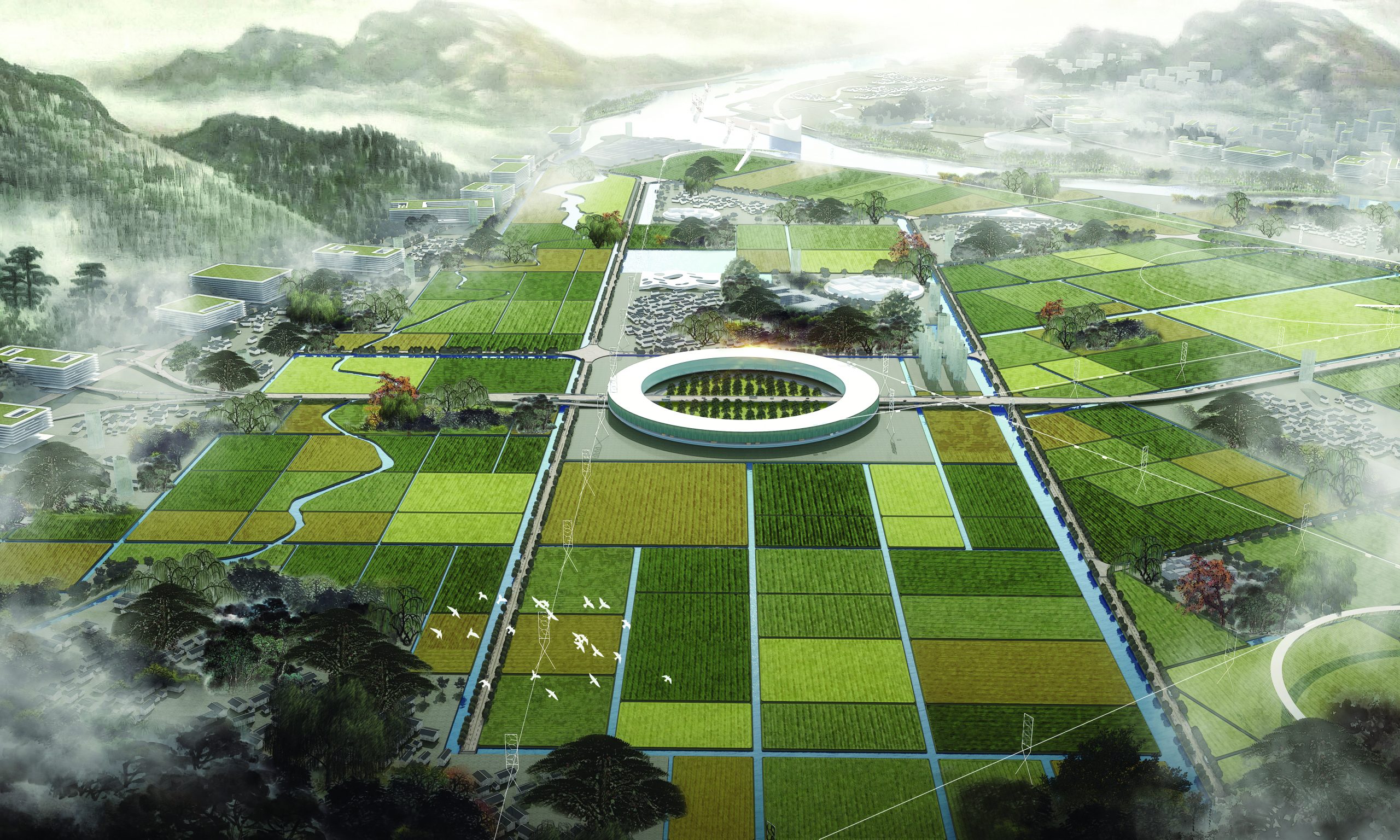
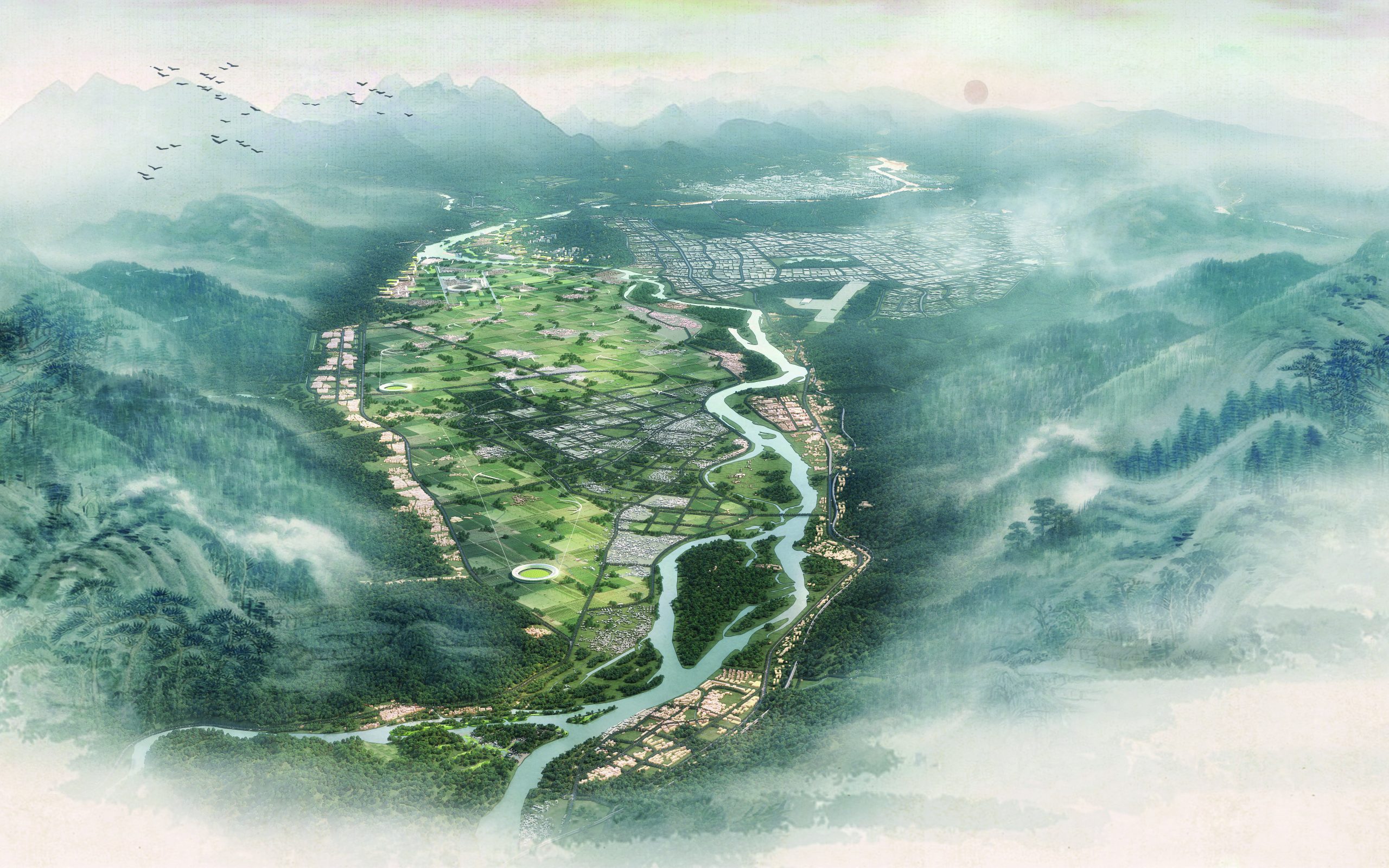
The project Prosperous Lishui developed by Politecnico di Torino (China Room and IAM) and South China University of Technology was awarded the third prize on 3rd November 2020 at the Future ShanShui City International Urban Design Competition. In May 2020, the Lishui Municipal government launched an international call to redesign an overall area of 152 square kilometers composed of several urbanised areas and a network of rural villages, spread within a still agricultural valley and surrounded by a picturesque “alpine” landscape. Lishui valley is located in the southern Zhejiang province, on China’s Eastern Coastal Region. Thanks to the Ou river, meandering through the valley floor, and to its mountainous background, the city – with a population of 2,7 million – is famous for its “lucid waters and lush mountains”, together with a rich cultural heritage and an emerging new economy. The competition attracted over 140 Architecture firms from all around the world, being an almost unique opportunity to explore at the territorial scale the relations between urban development and preservation of the traditional landscape. The proposal is based on the preservation of the vast agricultural plain – one of a very few flatlands in southern Zhejiang – as the heart of a new developemnt. The protection of the farmland, and of the riparian buffer, which is extremely important in terms of future agricultural production and environmental safeguard, led to the decision of concentrating the most part of the urbanisation, the public transportation system and the main facilities along the footslopes.
The result was a new metropolitan-like area based on a linear urbanisation and consisting of three main spaces: the farmland, with the existing rural villages improved and equipped with new public facilities as the new center of the urbanisation, the residential settlements placed along the edges of the valley, and the network of environmental corridors permeating the entire valley. The research for a new balance between city and countryside – not just conceived in terms of aesthetic matter, but in a broader sense, also from a social and economic point of view – was the main challenge of the proposal: a vision that identified Lishui Valley as an ideal place to reassert and practice the long-standing relationship between nature and artificial adaptation of the land to human needs through an innovative model. Therefore Prosperous Lishui is most of all a place to investigate the traditional aporia between conservation and innovation and to explore new possibilities for a new development model, more attentive to the quality of life, the heritage of the past and the local environmental values.