EVENTS
Cosmologies. Rethinking Anomalies in Urban and Architectural Research on China and Beyond
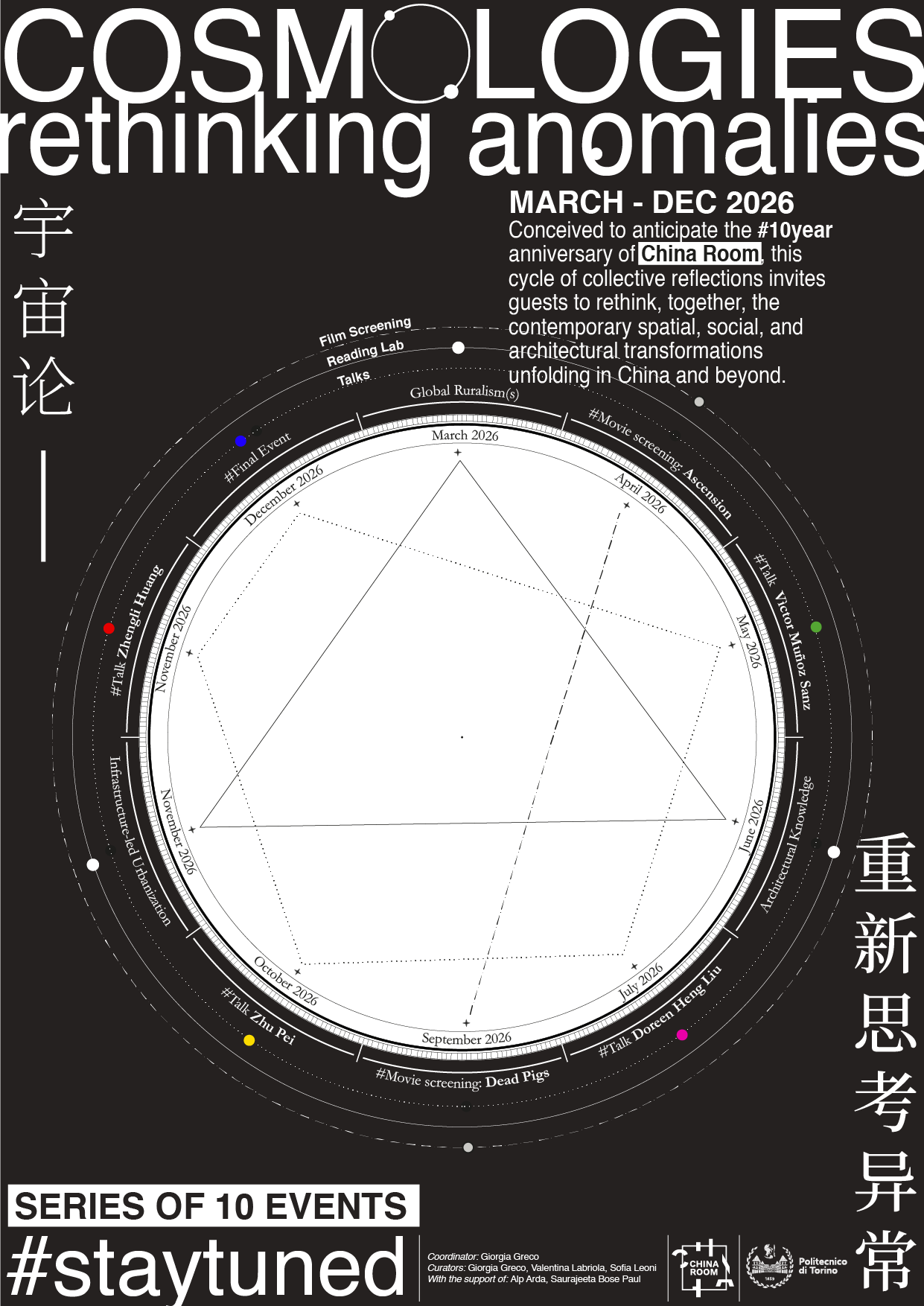
MAR-DEC 2026
Conceived to mark the ten-year anniversary of China Room, this siries of ten events – or, more precisely, collective reflections – invites researchers and practitioners to rethink, together, the contemporary spatial, social, and architectural transformations unfolding in China and beyond.
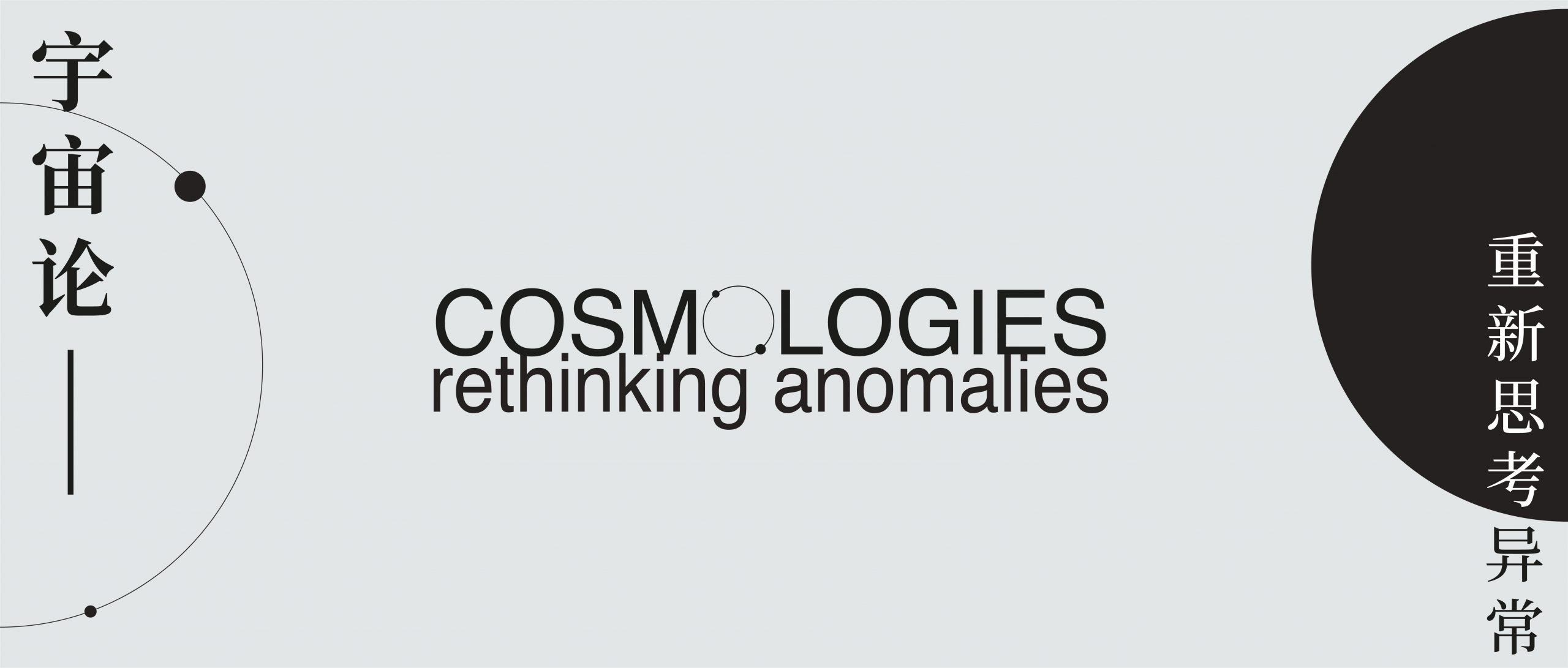
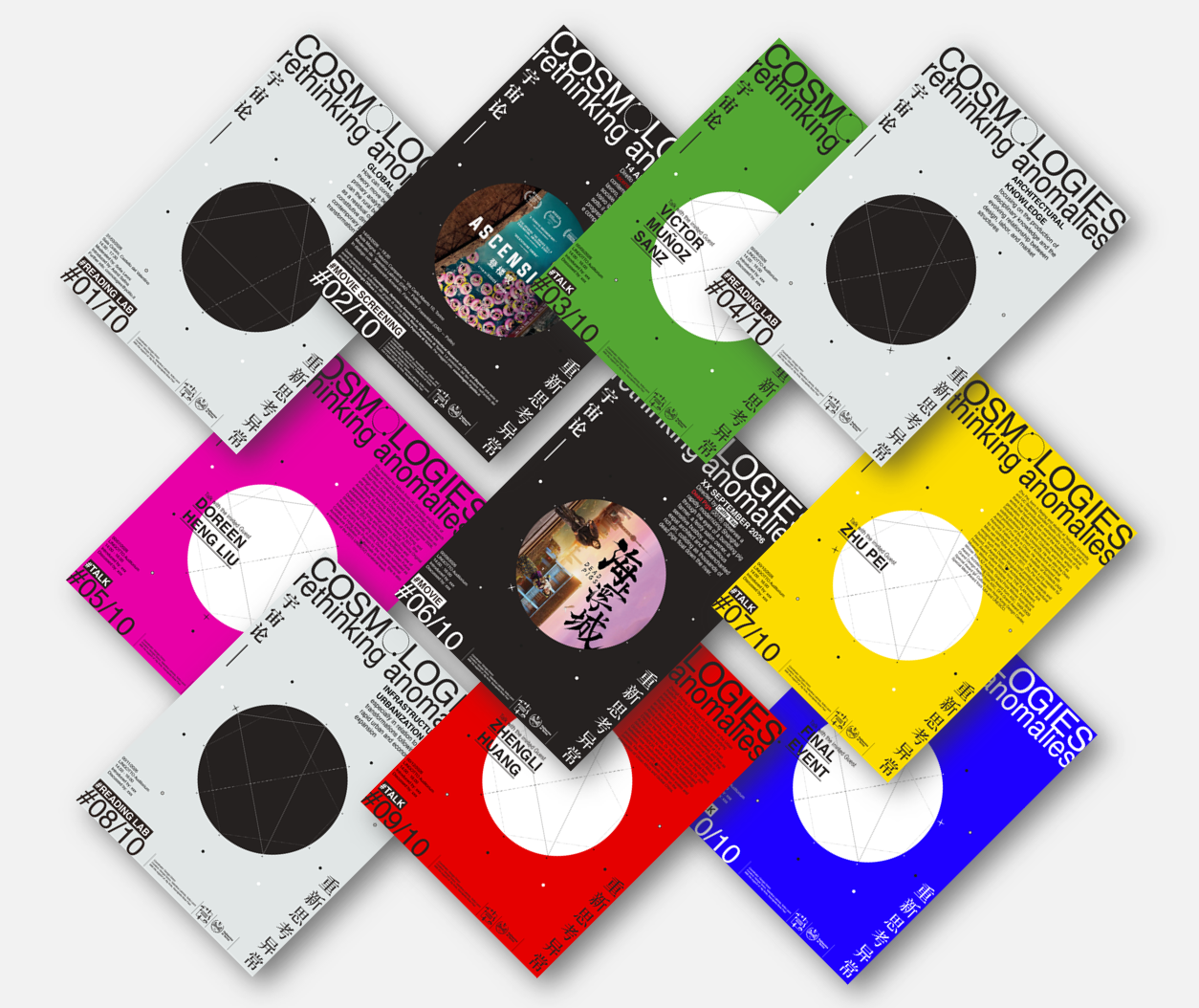
The cycle “COSMOLOGIES. Rethinking Anomalies in Urban and Architectural Research on China and Beyond” unfolds as a series of ten meetings, conceived as moments of openness, discussion, and exchange.
Through the notion of Cosmologies, the initiative proposes to rethink anomalies in urban and architectural research not as exceptions, but as manifestations of plural and coexisting worlds, capable of critically interrogating the contemporary spatial, social, and architectural transformations unfolding in China and, more broadly, within the global context.
The three main themes are: Global Ruralism(s), Architectural Knowledge, and Infrastructure-led Urbanization.
The program is structured into 10 meetings, organized as follows:
- #ReadingLabs, conceived as experimental spaces for reflection and critical exchange;
- #Talks with international guests addressing the same themes, mobilizing different geographies, scales, disciplines, and experiences: Vìctor Muñoz Sanz, Doreen Heng Liu, Zhu Pei and Zhengli Huang;
- #MovieScreenings, designed to open the discussion from the wider academic community to the general public.
Anomaly has too often been the lens through which China is read: its economic acceleration, its urbanisation, its architectures, and its institutional configurations have been framed as deviations – exceptions explainable only through the familiar formula with Chinese characteristics.
This has produced an interpretative habit rooted in a binary logic in which China is positioned as the Other of presumed universal models. Since its foundation, China Room has worked to rethink this dichotomy, insisting instead that understanding China requires abandoning the language of exception and recognising how “localised specificities surpass local transformation processes,” generating insights that extend far beyond their immediate contexts.
Cosmologies becomes an opportunity to open our research toward a broader academic community, within Politecnico and beyond, across disciplines, practices, and modes of knowledge production, in order to cultivate analytical tools capable of situating China within global processes. Resisting anomalies thus becomes a methodological stance: a way of expanding the horizons of spatial and architectural thought by refusing reductive framings and embracing the complexity of China’s entanglements with the world.
Each Cosmology, or better say each topic or event, marks a point of conjuncture within a decade-long trajectory of research: some stem from earlier projects, others signal new lines of inquiry opening within our fields.
The term Cosmologies is used here not only in a metaphorical sense, but also as a critical lens. In contemporary anthropology, sociology, and critical studies, cosmologies are increasingly understood as ontological arrangements: situated ways of composing the world that define how humans, non-humans, environments, institutions, and forms of knowledge are related and made operative.
Cosmologies is employed here as a critical concept referring to plural ontological frameworks through which the world is composed and understood. Rather than treating non-Western contexts as deviations from universal models, this perspective recognizes modernity itself as a historically and geographically situated cosmology, one among others, rather than a neutral or universal horizon. Framing urban and architectural research through Cosmologies allows us to rethink anomalies not as exceptions, but as manifestations of diverse and coexisting modes of world-making, extending well beyond the case of China.
#01 READING LAB
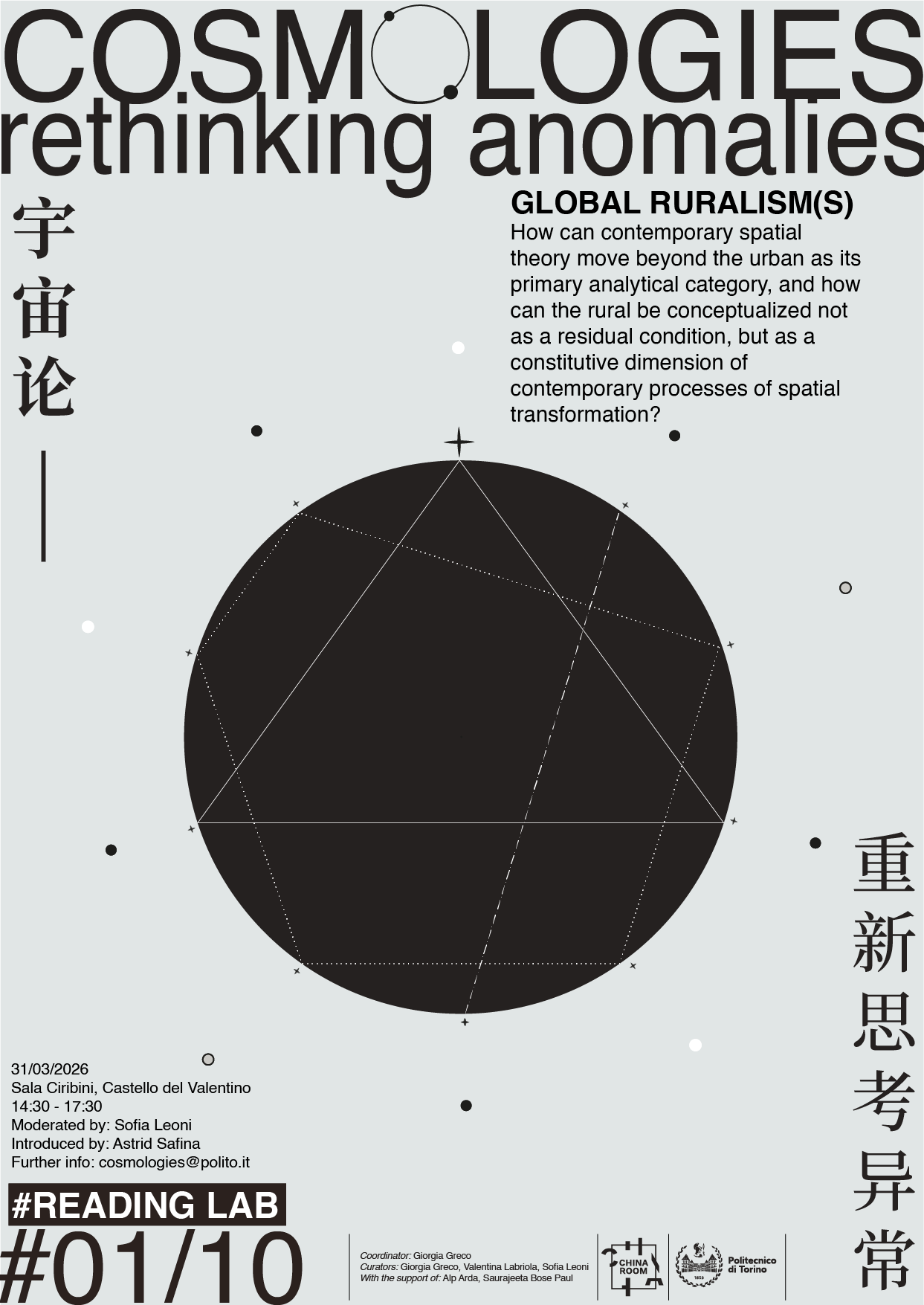
— Global Ruralism(s)
What is rural space today, particularly when examined from a planetary perspective? How might it be theorized beyond metro-normative paradigms and approached as a space in its own right?
This roundtable takes these questions as its point of departure, engaging a set of selected articles as conceptual anchors. Rather than casting the rural as peripheral, residual, or derivative of the urban, the discussion positions it as a generative spatial condition, structured by its own logics, infrastructures, temporalities, and capable not only of being interpreted, but of producing theory in its own terms.
Reading labs are conceived as experimental spaces for collective reflection, open debate and critical exchange among PhD researchers and scholars. The event is open and free. To participate and receive the materials, please write to cosmologies@polito.it
Moderated by Sofia Leoni and introduced by Astrid Safina.
DATE: March 31, from 2:30 to 4:30 PM
VENUE: Ciribini Room, Castello del Valentino, Politecnico di Torino
LANGUAGE: English
ONLINE: https://polito-it.zoom.us/j/84415819786
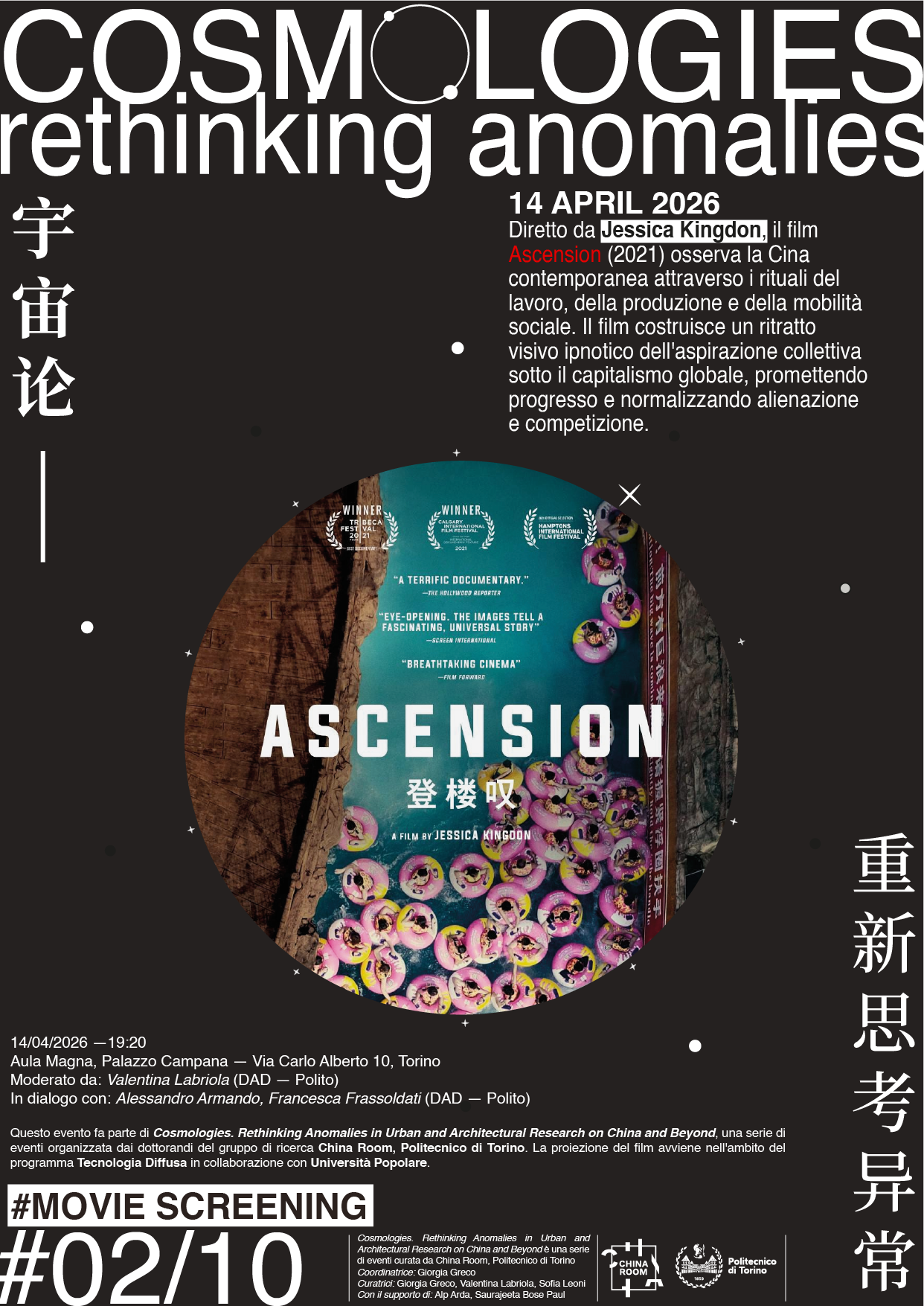
#02 MOVIE SCREENING — Ascension (2021)
Directed by Jessica Kingdon, the movie “Ascension” (2021) observes contemporary China through rituals of labor, production, and social mobility. The film builds a hypnotic visual portrait of collective aspiration under global capitalism, proising progress while normalizing alienation and competition.
The event consists of a film screening guided by a critical discussion of the themes addressed, inviting the audience to explore the boundaries between design, technology, and society, and to question the visual languages through which collective aspirations are constructed.
This event is held within the Tecnologia Diffusa framework and in partnership with Università Popolare di Torino.
Moderated by Valentina Labriola in dialogue with Alessandro Armando (DAD) and Francesca Frassoldati (DAD)
DATE: April14, from 7:20 PM
VENUE: Aula Magna, Palazzo Campana — Via Carlo Alberto 10, Torino
LANGUAGE: Italian
CREDITS
Scientific Curatorship: Giorgia Greco (main coordinator), Valentina Labriola, Sofia Leoni
Team: Alp Arda, Saurajeeta Bose Paul
Talks: Giorgia Greco
Reading Lab: Sofia Leoni
Movie Screening: Valentina Labriola
Graphics: Alp Arda, Giorgia Greco