

APPLIED RESEARCH
Tianjin 3615:
6 Courtyards
1 Landscape
2022
The concept regeneration design of the former 3615 Industrial, located in Jizhou District, Tianjin, China, was developed by the Department of Architecture and Design China Room in collaboration with a local architectural office, Quarta & Armando Architecture, between January and May 2022. The site has been selected for the development of a ‘Safety and Emergency Innovation Incubator Park’. The aim is to promote the reuse of existing resources through courtyards as a morphological device.
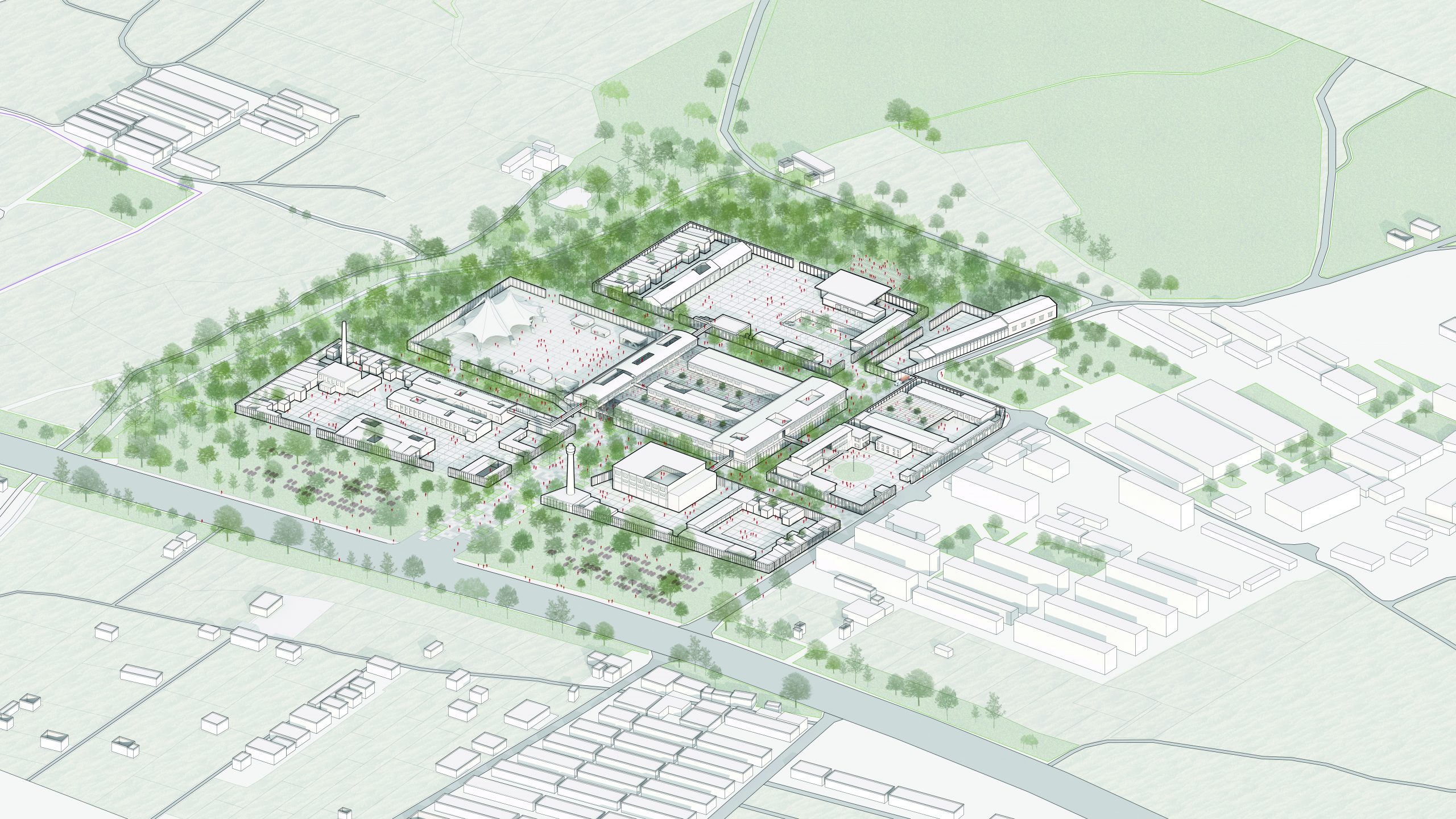
ARCHITECTURAL DESIGN
Period: January – May 2022
Location: Jizhou District, Tianjin, within the Beijing-Tianjin-Hebei Economic Circle, China
Developed for: 3615 Safety and Emergency Innovation Incubator Park Tianjin
In collaboration with: Quarta & Armando Architecture Design Research
RMB290.000/€37.077
CREDITS:
PROJECT LEADERS: Michele Bonino, Edoardo Bruno
ARCHITECTURAL DESIGN: Giulia Montanaro (coordinator), Xian Lu
LOCAL ARCHITECTS AND INTERIOR DESIGN: Michele Armando, Gianmaria Quarta, Gu Tao -Quarta & Armando Architecture Design Research
COLLABORATORS: Federico Asinelli, Federico Belfiore, Enrico Massetani, Zihe Wang, Rui Xu, Jiang Ye, Yelin Zhang
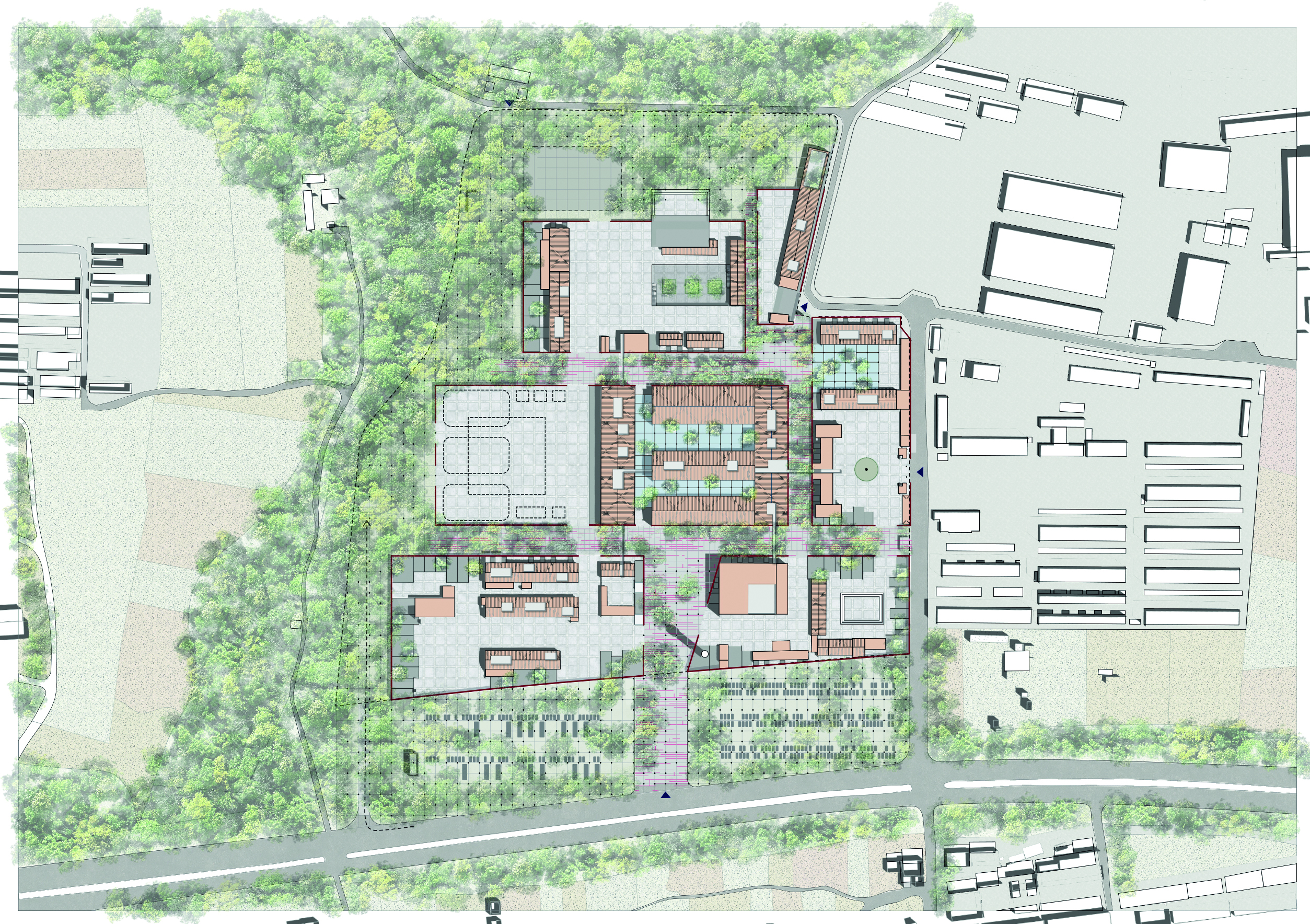
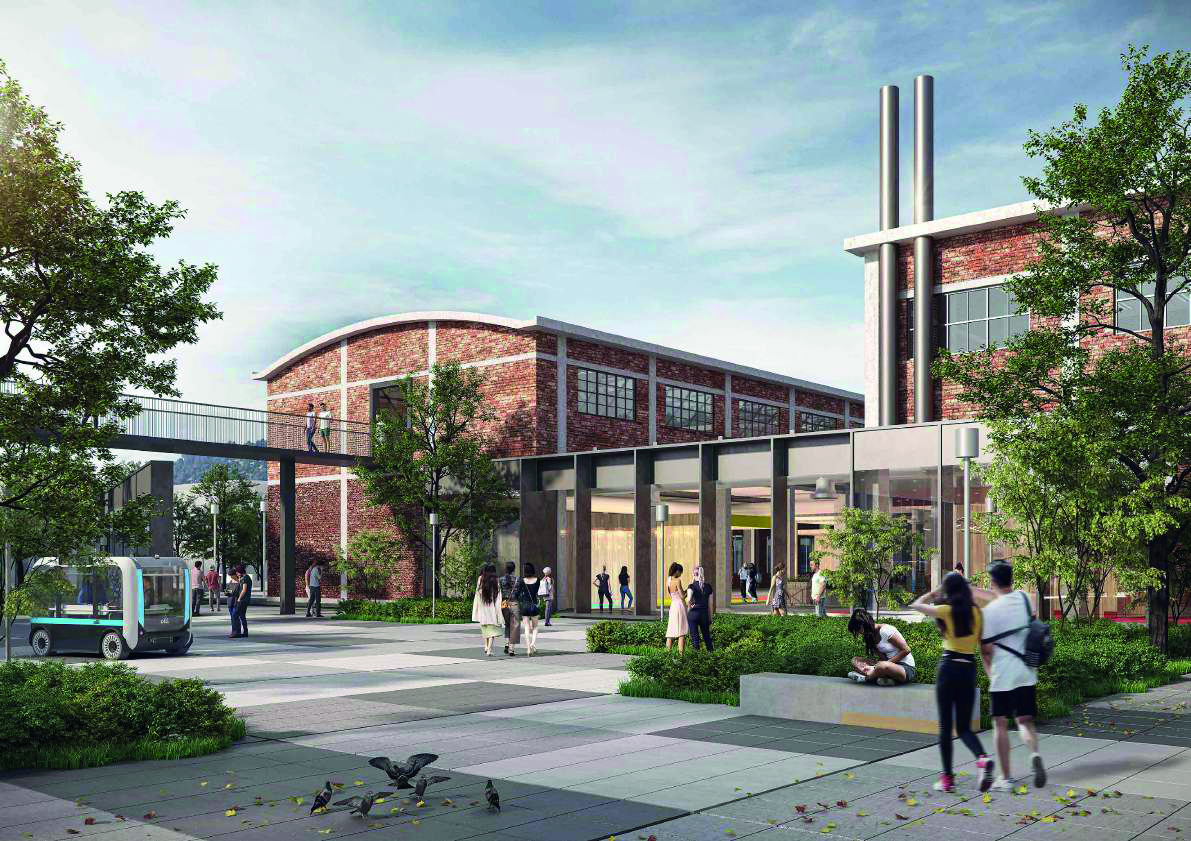
The project concept is based on an organisation of six thematic courtyards, effectively conceived as public squares. They act as a morphological device that promotes a new order between internal and external functions to maximise the recombination of flexible spaces and ensure a precise corporate dynamic. This approach reassembles the existing factory buildings into a small scale urban system, where landscape and vegetation seem leessly merges with the urban
environment from the west.
The ground floor space is systemised by a continuous facade that is treated differently according to the courtyard function it identifies. The thickness developed between it and the existing buildings becomes a denser design space for the resolution of necessary extensions or technical spaces.
This design research promoted the imperative of systematically reorganising existing resources through a thoughtful approach. This important issue emerging in the Chinese context for more sustainable architectural and urban developmen highlights the potential of industrial regeneration in China from an applied research perspective. The focus was on identifying the most effective way to meet the client’s need in a complete transformation of the original functions with their concrete implications. In this perspective, the systematic role of the six courtyards was an effective design strategy to manage the space at different scales, carried out through a careful design of “interstitial” spaces, a theme that can extend this experience to future critical reflections and considerations.